Choose joy. Share joy.

Safety Check: Houseplants and Your Pets – Resources for You

Safety Check: Houseplants and Your Pets – Resources for You
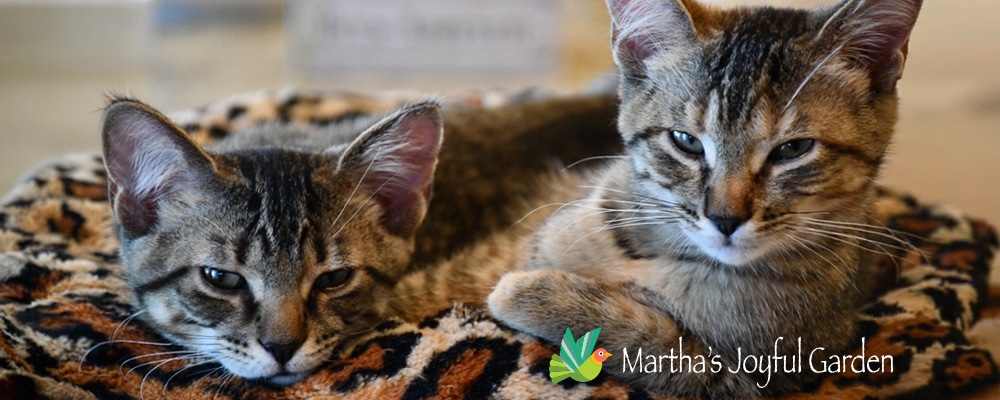
Two sleepy cats cuddled up in a brown blanket.

In 2024, 66% of US households had at least one pet. We love our companions and many of us consider pets to be part of the family (Megna, 2026).

If you have pets and like to have houseplants in your home, you may want to be aware of some of the toxicity of some of these for our beloved friends.

Common plants including lilies, tulips, oleander, and sago palms can be poisonous to pets if eaten. Some lilies are especially dangerous to cats and can be fatal even in small amounts (San Filippo, 2025).

The Animal Humane Society has so many wonderful resources for us. One of these includes a list of toxic plants and their various toxicity levels to keep away from your pets. These include—but are not limited to:

  • Amaryllis
  • Autumn Crocus
  • Azalea
  • Bird-of-paradise
  • Bishop’s-weed
  • Bleeding Heart
  • Blue-green Algae
  • Boxwood
  • Bulb Flowers
  • Caladium (Elephant Ear)
  • Calla Lily
  • Cardinal Flower
  • Clematis
  • Cyclamen
  • Daffodil Bulb
  • Dieffenbachia (Dumb Cane)
  • Easter Lily
  • Elderberry
  • English Ivy
  • Euonymus (Burning Bush)
  • Foxglove
  • Fruit Trees
  • Holly
  • Hydrangea
  • Lantana Lily
  • Lily of the Valley
  • Lupine
  • Marijuana
  • Mistletoe
  • Monkshood (Wolfbane)
  • Morning Glory
  • Mushrooms
  • Nightshades
  • Oak
  • Periwinkle
  • Philodendron
  • Poinsettia
  • Pothos
  • Privet
  • Ranunculus (Buttercup)
  • Snowdrop
  • Sweet Pea
  • Yews

Remember: ANY plant can be problematic for pets (ASPCA, 2026).

Here are a few resources for you:

American Society for the Prevention of Cruelty to Animals https://www.aspca.org/
American Veterinary Medical Association https://www.avma.org/
Animal Humane Society https://www.animalhumanesociety.org/

Let’s keep our pets safe and healthy. If you have any questions about your pet’s health or if you have an emergency, please reach out to your veterinarian, or the ASPCA Animal Poison Control Center (1-888-426-4435) or Pet Poison Helpline (1-855-764-7661).
Would you like to take a digital detox to learn more about nature and to connect with others?

Subscribe to Martha’s Joyful Garden, a monthly stationery subscription service created to bring a little more beauty and wellness into your month. With each mailing, you’ll learn something new about plants and receive beautiful botanical stationery notecards delivered to your door. Let this become a small, joyful ritual for yourself—and a meaningful way to share a bit of brightness with someone else.

*The photo above, while property of Martha’s Joyful Garden™, is meant for representative purposes only and is not the pictorial representation in our subscription mailing. If you would like to order copies of this photograph or cardstock – or any others that are published on this website – please contact us directly for additional information at info@marthasjoyfulgarden.com

Resources