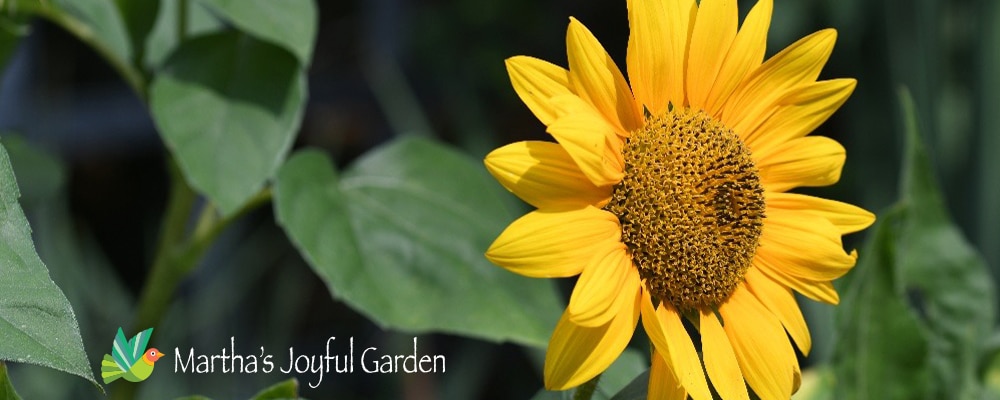
If you subscribe to our September mailing, you’ll receive beautiful botanical stationery products and information as part of your monthly subscription. One of these products includes a postcard featuring beautiful sunflowers* specifically, the Mammoth Grey Stripe variety.
Did you know that in 2025, farmers in the United States grew 2.3 billion pounds of sunflowers? This was twice as much as 2024. North Dakota and South Dakota had the greatest increases as well as Kansas and Texas. Colorado, Nebraska and Minnesota also had significant production (NSA, 2026).
In 2026, US farmers planted 1.35 million acres of sunflowers, which was an approximate 5% increase from 2025. While the primary goal of these massive, golden fields is to produce sunflower oil, there is also current research under way. A specialized branch of the USDA—the Sunflower Improvement Research Unit, is working to enhance sunflower production by improving sunflower adaptation, resistance to disease and insect pests, benefits to pollinators, and product quality through basic and applied research.
While sunflowers are big business in the US and around other areas in the world, you can easily grow these in your own yard.
Sunflowers bring a bright, cheerful touch to any garden. They are also favorites among pollinators, including the important honeybee, and their seeds provide food for many birds.
Sunflowers have a special ability called heliotropism. This means young sunflowers turn to follow the sun as it moves across the sky from east to west during the day. At night, they turn back toward the east, so they are ready for the next sunrise. This movement helps them receive more sunlight, which supports stronger growth and healthier leaves. The center of the sunflower is especially sensitive to the sun’s direction. When sunflowers face east, they warm up earlier in the day, which makes them more inviting to pollinators like bees (Barrett, 2021).
Would you like to take a digital detox to learn more about nature and to connect with others?
Subscribe to Martha’s Joyful Garden, an online stationery subscription service created to bring a little more beauty and wellness into your month. With each mailing, you’ll learn something new about plants and receive beautiful botanical stationery notecards delivered to your door. Let this become a small, joyful ritual for yourself—and a meaningful way to share a bit of brightness with someone else. Visit www.marthasjoyfulgarden.com to learn more!
*The photo above, while property of Martha’s Joyful Garden, is meant for representative purposes only and is not the pictorial representation in our September subscription mailing. If you would like to order copies of this photograph or cardstock – or any others that are published on this website – please contact us directly for additional information at info@marthasjoyfulgarden.com
Resources
Barrett, J.J. (June 1, 2021). What is heliotropism? West Virginia University, Extension Division. https://extension.wvu.edu/lawn-gardening-pests/news/2021/06/01/what-is-heliotropism?
National Sunflower Association (2026). 2025 US sunflower acreage and production. National Sunflower Association. https://www.sunflowernsa.com
USDA (2026). Sunflower improvement research: Fargo, ND. USDA Agricultural Research Service. US Department of Agriculture. https://www.ars.usda.gov/plains-area/fargo-nd/etsarc/sunflower-improvement-research/